Illinois Archaeology:
The Deep Roots of the Prairie State
On display in the History Center Gallery January 14 — February 22, 2026.
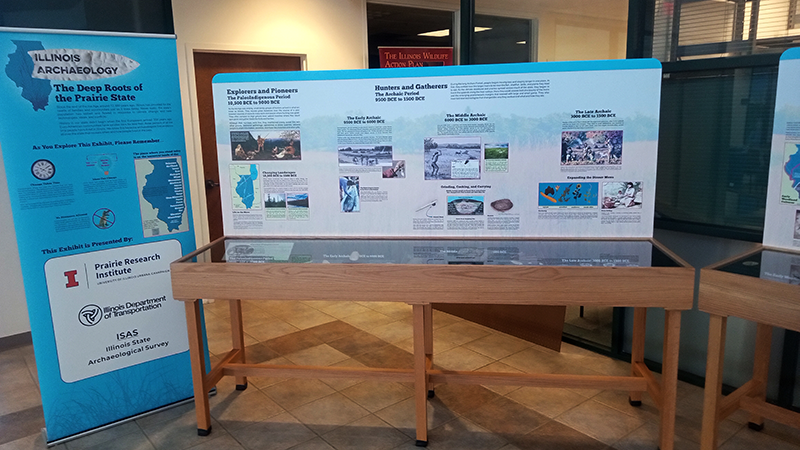
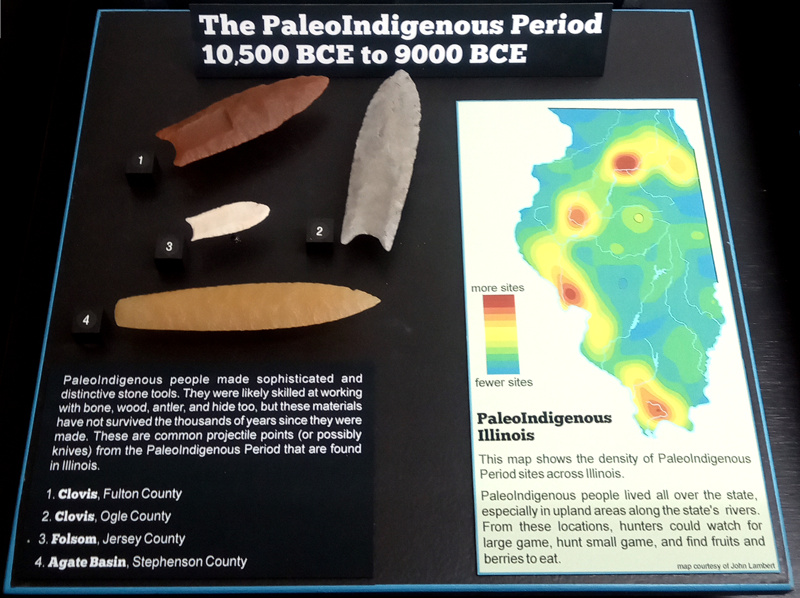
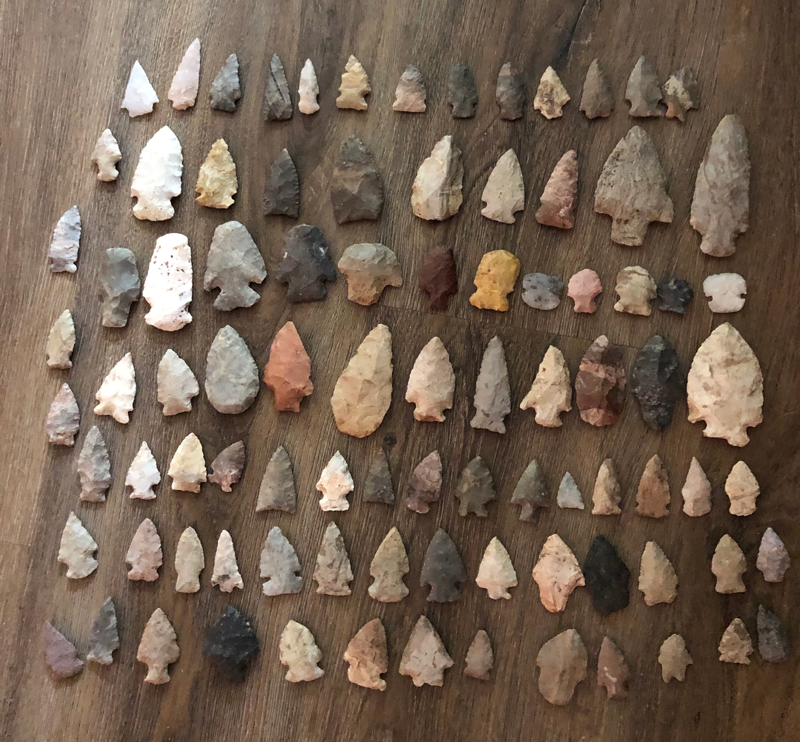
Illinois Archaeology: The Deep Roots of the Prairie State explores where and how people have lived in Illinois for the last 12,500 years. It examines the archaeological evidence and what it reveals about how factors such as climate change and new technology altered the way people lived.
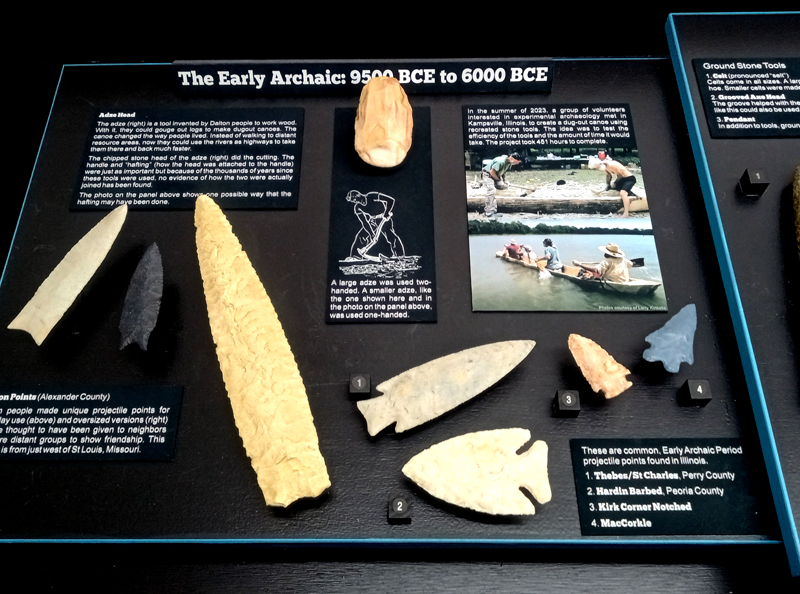
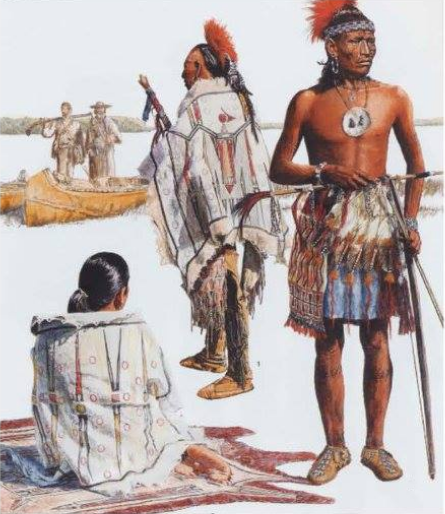
The exhibit begins with the arrival of Illinois’ first residents, who came as the Ice Age’s glaciers retreated northward. Over time, populations increased, and people began to spread across the state. Where and how they lived went hand in hand with their inventions, like the adze, earth ovens, ceramic technology, and agriculture. The arrival of the French and other Europeans in Illinois had profound effects on Native American lifeways. The exhibit concludes with the arrival of Euro-Americans and the forced removal of the Native Nations that had called Illinois home for millennia. This section includes an interesting examination of a group of artifacts that may be from the home of an enslaved African American man living on the Jackson and Perry County line in the mid-to-late 1810s.
The exhibit was produced by the Illinois State Archaeological Survey, which is one of five scientific surveys that make up the Prairie Research Institute of the University of Illinois. The Prairie Research Institute unites scientific expertise in geology, ecology and biodiversity, archaeology, hydrology and water, weather and climate, pollution prevention, and sustainable energy to benefit the people, economy, and environment of Illinois, the nation, and the world.
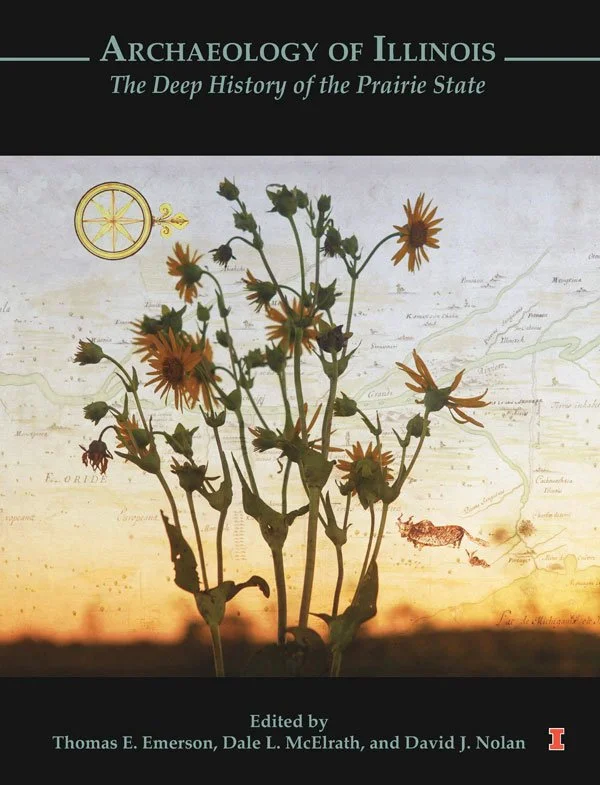
The exhibit is the companion to the book by ISAS titled Archaeology of Illinois: The Deep History of the Prairie State, which was published in June 2025.